Last updated November 22, 2026
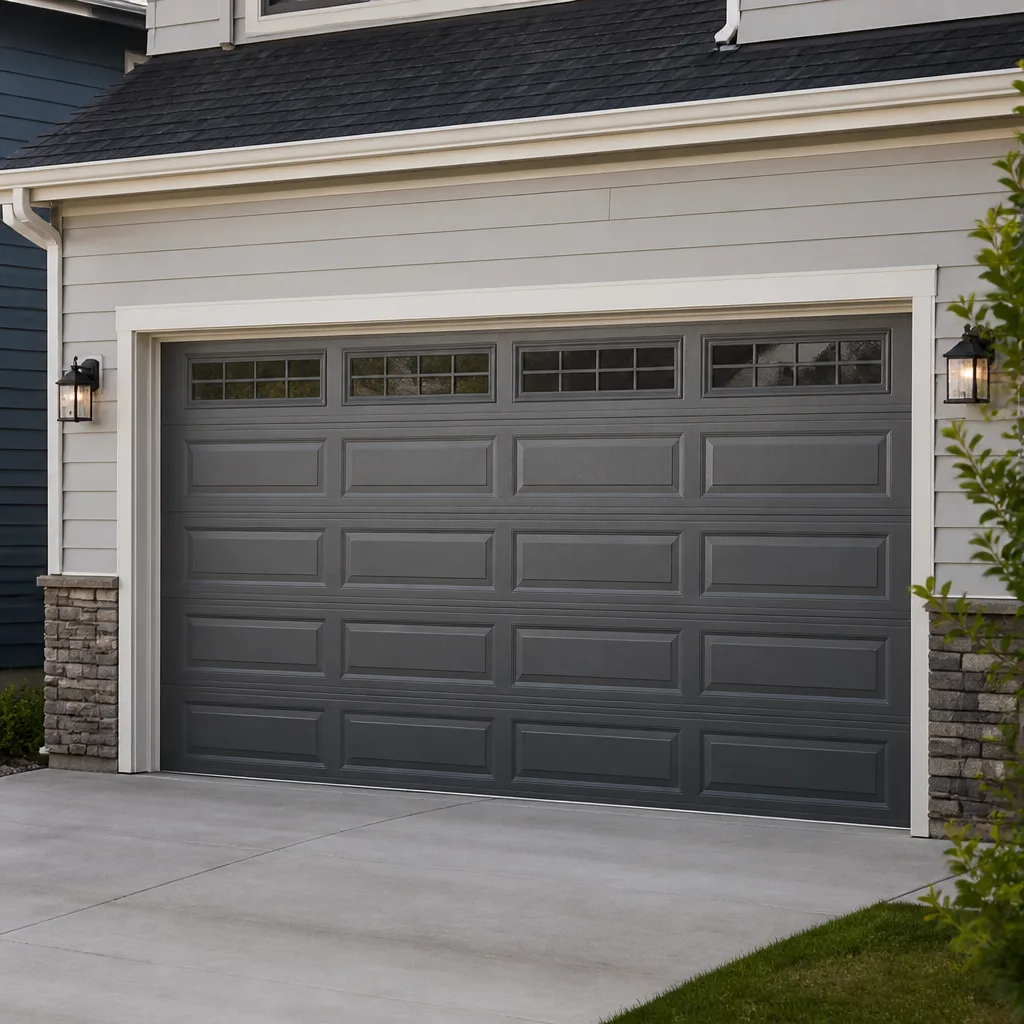 Raised-panel steel
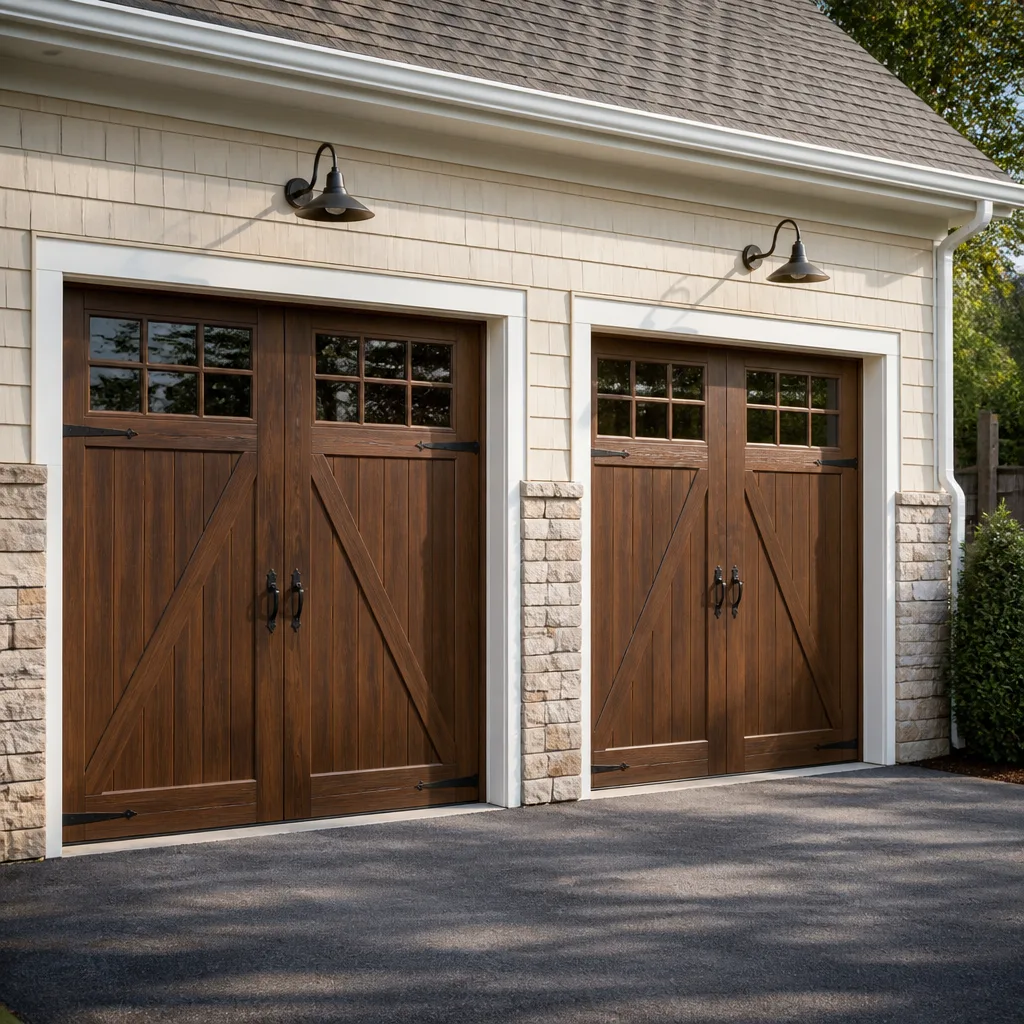 Carriage house
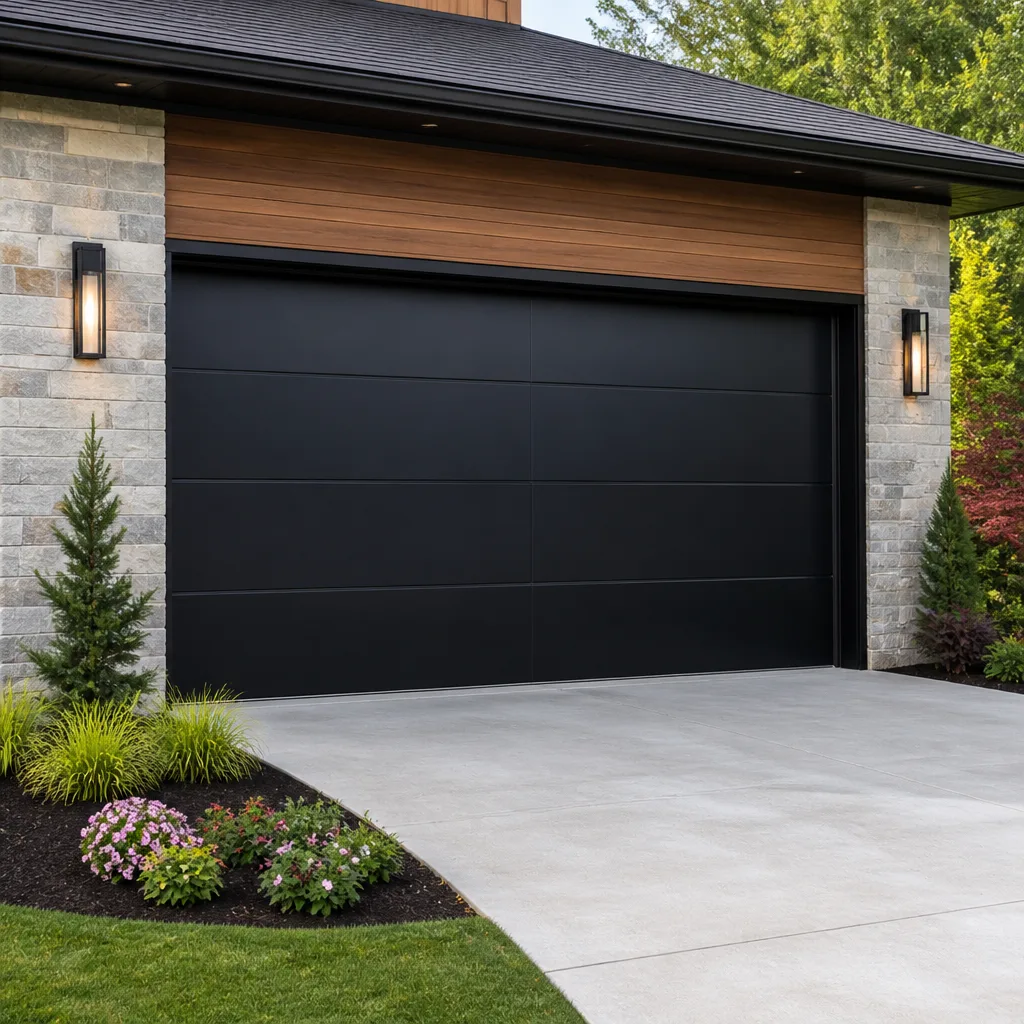 Modern flush
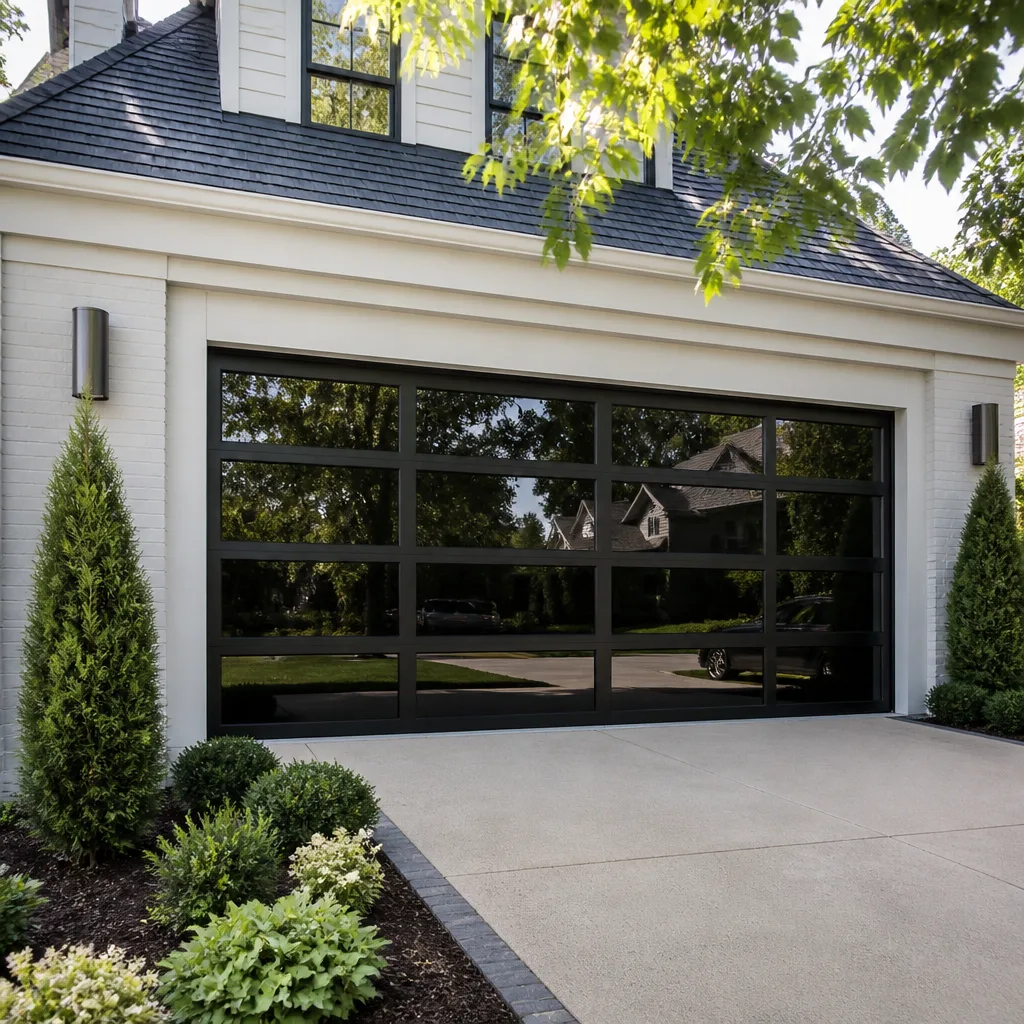 Full-view glass
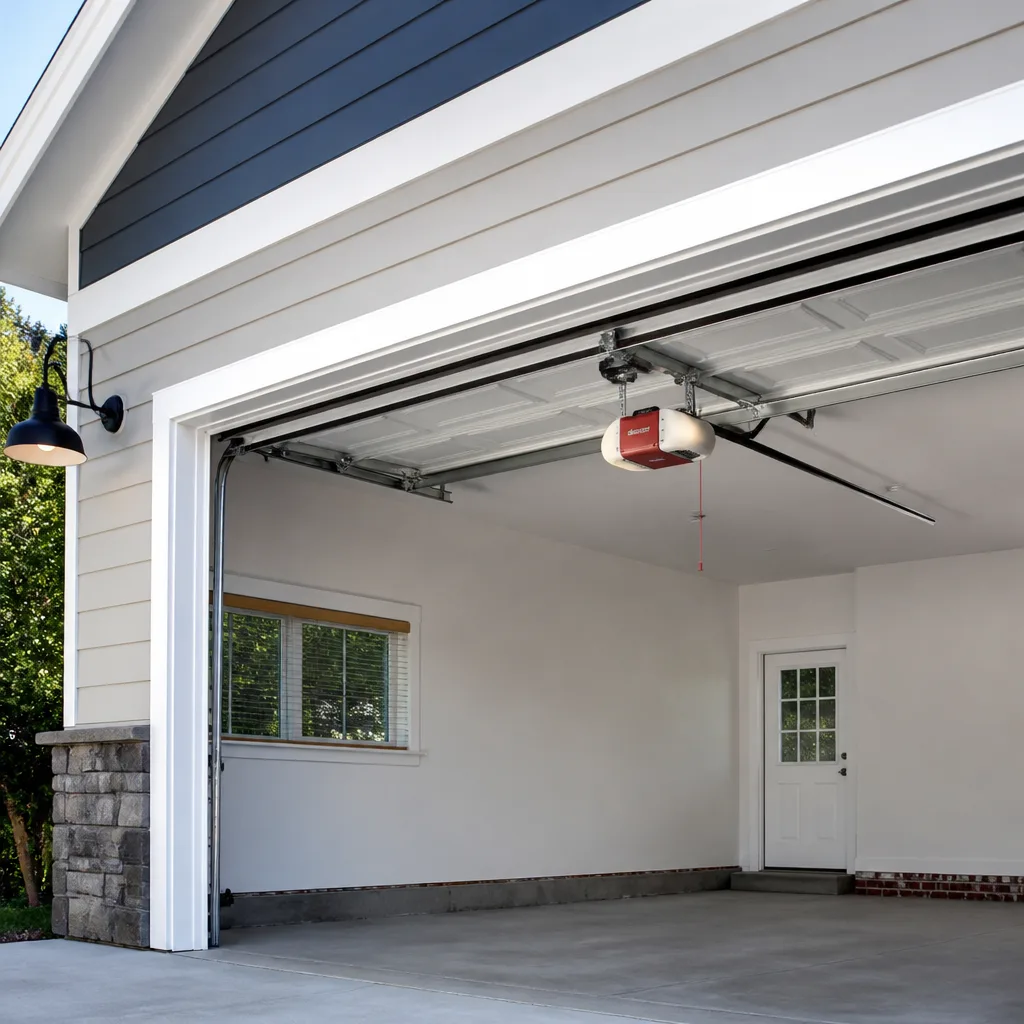 LiftMaster openers
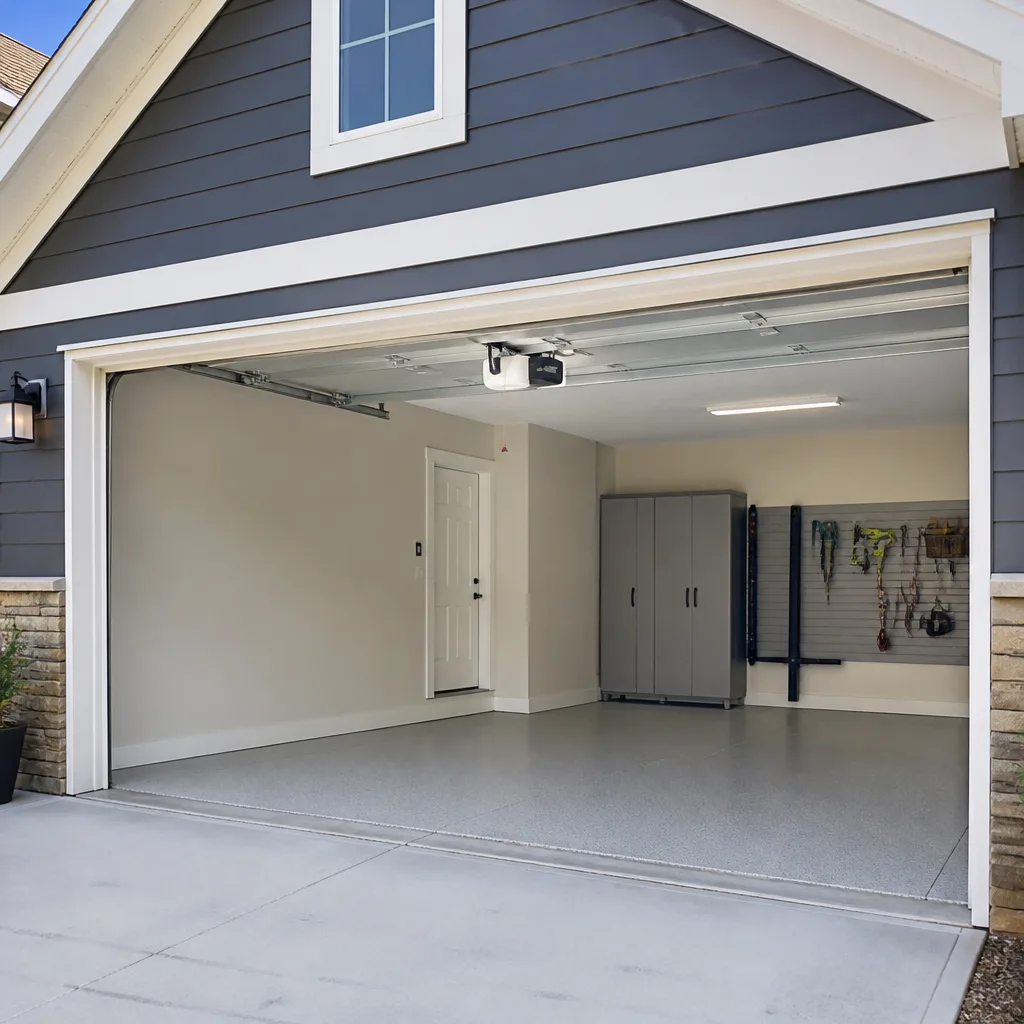 Chamberlain openers
Full 25-point door and opener safety check with every visit - springs, cables, rollers, tracks, and your LiftMaster or Chamberlain opener included
You get a price before we start. It does not change when the pro arrives.
Get your free estimateGarage Door Emergency Preparedness Guide for St. Charles Homes
Most garage door emergencies aren’t really emergencies. They’re surprises. A spring that’s been fatigued for months finally snaps on the coldest morning of the year. A bottom seal that’s been slowly pulling loose freezes to the slab overnight. A power outage kills the opener while the car’s inside and the school run is in forty minutes. In St. Charles, where ice storms roll through most winters and the temperature swing between a January morning and a July afternoon is wide enough to work every moving part on a door, these moments repeat themselves in predictable patterns. Predictable means preventable. This guide walks through what actually fails, how to prepare for it, and what to do in the first five minutes when something goes wrong. You’ll learn the manual release procedure, the safe way to free a frozen door, battery backup options, and the checklist that turns a three-hour emergency into a twenty-minute inconvenience.
Quick Answer
Garage door emergencies in St. Charles usually come down to four failure points: a snapped torsion or extension spring, a door frozen to the ground after an ice storm, an opener that loses power with no manual release tested, or a cable that’s jumped its drum. Preparation means testing the manual release twice a year, keeping a small parts kit on hand, writing down your opener model number, and knowing the signs of a spring about to fail. When a spring does snap, stop operating the door entirely and call a professional.
Styles & brands we work with
- Raised-panel steel
- Carriage house
- Modern flush
- Full-view glass
- LiftMaster openers
- Chamberlain openers
Table of Contents
- Understanding How Garage Doors Fail in St. Charles Weather
- How to Operate the Manual Release on Every Major Opener Brand
- Ice Storm Protocol: Freeing a Frozen Garage Door Safely
- Power Outage Prep: Battery Backup and Interim Manual Operation
- What to Do Immediately When a Spring Snaps
- The Emergency Contact and Parts-on-Hand Checklist
- Fall Prep Checklist for St. Charles Homeowners
- Light-Commercial Doors: What Small-Business Owners Should Know
Understanding How Garage Doors Fail in St. Charles Weather
Garage doors are simple machines operating in an environment that isn’t kind to simple machines. Steel expands in July heat and contracts in January cold. Torsion springs cycle thousands of times per year and are rated for a specific cycle count before they fatigue. Rubber seals harden and crack. Lubricant thickens at low temperatures and lets rollers drag. The St. Charles climate accelerates all of this because the temperature swings are wide and the ice events are frequent.
In our experience, the failures we see most in St. Charles break down into a handful of categories:
- Spring failure. Torsion springs typically snap on the coldest mornings after a night of thermal contraction. Extension springs fail similarly, though often with more noise and sometimes with visible damage to the surrounding hardware.
- Frozen bottom seal. A door that’s parked on wet ground overnight can freeze to the slab if the seal isn’t seated properly or has developed a tear. Trying to force it up with the opener strips gears.
- Cable jump. When a cable comes off the drum, one side of the door lifts and the other doesn’t. The door racks and jams. This can happen on its own or as a secondary failure after a spring breaks.
- Opener gear failure. Plastic drive gears in many openers wear out over time. The symptom is a motor that runs but doesn’t move the door.
- Safety sensor misalignment. Snow, ice, and lawn equipment knock sensors out of line. The opener stops responding and homeowners assume the motor’s dead.
The key insight is that most of these failures announce themselves before they happen. A spring that’s about to fail usually shows a visible gap or a slightly sagging door. A seal that’s about to freeze shows cracking and gaps at the corners. A cable about to jump shows a slight fray or an uneven drum wrap. Learning to read those signs is the whole game.
How to Operate the Manual Release on Every Major Opener Brand
The manual release cord is the most important safety feature on a garage door, and it’s the one most homeowners have never actually used. On LiftMaster, Chamberlain, and Craftsman openers, the red cord hangs from a trolley that rides the rail. Pulling it down disengages the trolley from the arm so the door can be lifted by hand. Genie openers use the same principle with a slightly different carriage design. Raynor and Wayne Dalton openers follow the same pattern. The cord is always red or has a red handle.
Here’s the procedure, and it’s the same across every brand:
- Make sure the door is fully closed. The manual release is designed to work with the door down. Pulling it while the door is up, or partially up, allows the door to drop.
- Stand clear of the door. Make sure no one is standing under the door and the path is clear.
- Pull the red cord straight down and toward the door. You’ll feel the trolley release. The door should now move freely by hand.
- Lift the door by the bottom section, using the lift handle if there is one. Lift evenly and slowly. If the door is heavy or won’t stay up, stop. The springs aren’t doing their job.
- To re-engage, close the door fully, then run the opener once. The trolley reconnects automatically on the next cycle for most brands.
The common mistake is pulling the cord while the door is under spring tension – meaning the door is up or partway up and the springs are holding it in position. In that state, pulling the release transfers the full weight of the door to your arms. A double-wide insulated door can weigh over two hundred pounds. Don’t do it. If the door is already up and won’t come down, call a pro.
We recommend testing the manual release twice a year in St. Charles – once in the fall before the first freeze, once in the spring. Lift the door by hand a few inches to confirm it moves freely. If it doesn’t, the springs or cables need attention, and that’s a job for garage door spring repair.
Ice Storm Protocol: Freeing a Frozen Garage Door Safely
When a garage door freezes to the ground, the instinct is to hit the opener and let the motor break it loose. That instinct costs homeowners more in repair bills than almost any other. A motor that’s rated to lift a balanced door isn’t rated to break an ice bond, and the first thing to fail is usually the plastic drive gear inside the opener. If the gear survives, the bottom panel bends or the bottom seal tears. Replacing a bottom panel on a steel door isn’t cheap, and on some brands it’s not possible without replacing the whole section.
The right procedure when you suspect the door is frozen:
- Don’t hit the opener. Disengage the manual release with the door in the closed position.
- Inspect the bottom seal. Look for visible ice where the door meets the slab. Run your hand along the bottom edge – carefully, since ice can be sharp.
- Break the bond gently. A rubber mallet tapped along the bottom edge, or a plastic scraper worked under the seal, will free most ice bonds without damage. Warm water in a spray bottle works on stubborn ice. Never use a metal tool to chip ice away from the door – the risk of gouging the steel and the seal is high.
- Lift the door manually once the bond is broken. If it moves freely, re-engage the release and use the opener normally.
- Clear the slab. Once the door is up, use a plastic snow shovel to clear any remaining ice or snow from the threshold so it doesn’t refreeze.
A door that froze once will freeze again unless the underlying issue is addressed. Usually it’s a worn bottom seal that’s no longer making proper contact, allowing meltwater to wick under and refreeze. If your St. Charles door froze shut this winter, it will freeze again next winter. Replacing the seal is a small job that pays for itself in avoided panel damage.
Power Outage Prep: Battery Backup and Interim Manual Operation
Power outages during ice storms are a fact of life in St. Charles. Some last an hour, some last a day. If your garage door is your only way in or out of the house, a dead opener becomes a real problem fast.
Battery backup is the cleanest fix. LiftMaster and Chamberlain both offer battery backup models and aftermarket battery backup kits, and Genie has similar offerings. Most battery backup systems provide a day or two of normal door operation during an outage – enough to get in and out safely until power returns. If you’re replacing an opener, choosing one with battery backup included is the single most useful upgrade a St. Charles homeowner can make.
For households without battery backup, the interim procedure is the manual release. With the door closed, pull the red cord and lift the door by hand. Once outside, close the door by hand and re-engage the release. The door stays unlocked during an outage, which is a security concern – so this is where a side-entry door or an emergency lock on the garage door matters. A deadbolt-style manual lock installed by a garage door technician is a small addition that solves the problem.
For a broader look at opener troubleshooting, see garage door opener repair.
What to Do Immediately When a Spring Snaps
A snapping torsion spring sounds like a gunshot coming from inside the garage. Some homeowners feel the house shake. Others just hear a loud crack followed by the door refusing to move. On extension spring systems, the failure is sometimes visible – the spring lies broken and stretched across the track. On torsion systems the spring breaks in the middle and is usually not visible until you look closely at the torsion tube above the door.
The first thing to do is nothing. Specifically:
- Don’t press the opener again. The opener is now trying to lift a door with no spring assistance. It will stall, trip, or destroy its gears.
- Don’t try to lift the door by hand. A double-wide door with broken springs can weigh two hundred and fifty pounds or more. Lifting it is dangerous even for a fit adult, and lowering it is worse.
- Disengage the manual release only if someone is trapped inside. Pull the red cord with the door in the closed position, lift with both hands, and hold the door fully open while the person exits. Never let go of a door with broken springs – it will come down hard. Have someone standing by to place a ladder or a sturdy support under the door if you can’t hold it.
- Call for professional spring repair. This is the one repair in the garage door trade where we tell every homeowner the same thing: don’t do it yourself. Torsion springs are under extreme tension and require specific winding bars and procedures. A spring that lets go during a DIY repair can cause serious injury. Extension springs are less dangerous but still deserve professional attention.
Our technicians have up to 14 years of experience with spring systems, which is precisely because we don’t encourage homeowners to touch them. Call for spring repair service when a spring breaks, and don’t operate the door until a technician has confirmed the system is safe.
A matched pair is replaced together
One important detail: when one spring in a matched pair breaks, the second spring is nearly as fatigued. Replacing only the broken spring usually means a return visit in a few months. Almost every reputable technician will recommend replacing both springs at once, and that roughly doubles the price of a single-spring quote. Ask upfront so there’s no surprise.
The Emergency Contact and Parts-on-Hand Checklist
Every St. Charles homeowner should keep a small kit for garage door emergencies. It’s not expensive and it turns a stressful morning into a manageable one.
- A spare bottom seal section or a full replacement roll. Bottom seals are the most common failure point after springs, and a spare means you can replace a torn one before it freezes into the slab.
- A can of appropriate garage door lubricant. Silicone-based or lithium grease specified for garage door hardware – not WD-40, which is a solvent, not a lubricant for this application. A quick spray on rollers, hinges, and the torsion tube once a season keeps everything moving.
- Spare remote batteries in the correct size. Remote batteries last years, then die the morning you’re already late. Keep a spare.
- Your opener model number and serial number written down. This is the single biggest time-saver on an emergency call. When the technician knows your opener’s model before arriving, they can load the right parts. Without it, they arrive, diagnose, drive back for parts, and return. That’s the difference between a twenty-minute callout and a three-hour one.
- Our phone number in your phone’s contacts. Save (877) 685-1815 under “Garage Door” so it’s easy to find when you’re not thinking clearly.
- A note of your door’s brand and approximate size. Amarr, Wayne Dalton, Clopay, Raynor – your door will have a small label or sticker on the inside of the top or bottom section. Snap a photo of it once and store it on your phone.
- A rubber mallet or plastic scraper. For freeing a frozen door without damaging the seal.
Put this kit in a plastic bin on a shelf in the garage and you’ll have it ready when you need it. The whole list costs less than a single emergency callout.
Fall Prep Checklist for St. Charles Homeowners
The best time to prepare for winter garage door problems is October. Once the first hard freeze hits, everything gets harder – the ground is frozen, the lubricants have stiffened, and the technicians are busier.
- Test the manual release. Door closed, pull the red cord, lift by hand. Confirm smooth operation. Re-engage.
- Lubricate moving parts. Rollers, hinges, torsion spring (not the coils themselves – a light spray on the tube), and the opener rail. Use garage door lubricant.
- Inspect and replace the bottom seal. Look for cracking, gaps, or flat spots. A fresh seal prevents freezing to the slab.
- Check the weatherstripping around the door frame. Torn or missing stripping lets cold air in and moisture to the seal.
- Test the safety sensors. Wave a hand between them and confirm the opener responds. Clear any cobwebs or debris.
- Balance test the door. Disengage the opener, lift the door halfway, and let go. A balanced door holds its position. A door that drops means the springs need attention.
- Check opener batteries in wall controls and remotes. Fresh batteries in the fall means no dead remote on the coldest morning.
- Clear the tracks of debris. A small leaf or a twig in the track will cause a jam that looks like a motor problem.
If any step reveals a problem – a door that won’t balance, a seal that’s clearly shot, a cable that’s frayed – get it addressed before the first ice storm. That’s when a small repair becomes a real emergency. When it does, garage door repair handled by a specialist gets you back to normal faster than a generalist working through the same diagnosis for the first time.
Light-Commercial Doors: What Small-Business Owners Should Know
A lot of St. Charles small businesses operate out of buildings with a light-commercial overhead door – a shop front, a service bay, a storage unit, a small warehouse. These doors face the same weather as residential doors and wear out faster because they cycle more. The failures are familiar to us: springs that fatigue twice as fast because the door runs twenty cycles a day instead of four, cables that fray from constant tension, rollers that flatten under repeated load.
For light-commercial doors, the manual release procedure is similar but the door is heavier. Never attempt to lift a commercial door with broken springs by hand. Most commercial doors use different spring systems and require specialized knowledge – the same spring tension rules apply, and the danger is greater because the springs are larger and under more tension. If you run a St. Charles business with a door that’s showing signs of fatigue, the fall prep checklist above applies. Add an inspection of the safety edge or photo-eye system too, since commercial door safety requirements are stricter than residential ones.
Emergency or scheduled, one call covers it – we handle both residential and light-commercial systems. If you’re a small-business owner in St. Charles, saving our number is worth the small effort. Call (877) 685-1815.
Common Mistakes to Avoid
- Pulling the manual release with the door up. Most homeowners pull the cord while the door is open because that’s when they think about it. That’s the moment the door drops. Always release with the door fully closed.
- Forcing a frozen door open with the opener. In St. Charles ice storms, this is the single most common cause of stripped opener gears. Disengage the release first, break the ice, then use the opener.
- Ignoring the second spring. When one spring in a pair breaks, the other is nearly fatigued. Replacing only the broken spring means a return visit in a few months. Replace both, and ask upfront about the price difference.
- Trying to repair a torsion spring yourself. Torsion springs are under hundreds of pounds of tension. Wind them without the proper bars and procedure and the spring can release violently. This is the one garage door repair that has no safe DIY version.
- Not writing down the opener model number. When an emergency happens, you don’t want to be crawling around the opener looking for a label while the technician waits on the phone. Snap a photo now.
- Using WD-40 on rollers and hinges. WD-40 is a solvent, not a long-term garage door lubricant. It washes away existing grease and leaves parts dry. Use a dedicated garage door lubricant.
- Assuming a motor running without movement is an opener problem. A dead opener can be a snapped spring. Before replacing the opener, have the door and springs checked. Otherwise you replace the motor and the door still doesn’t work.
- Leaving the door unlocked after a power outage. If you’ve been manually operating the door during an outage, the door is unlocked and anyone can lift it. A manual lock solves this until power returns.
See the difference
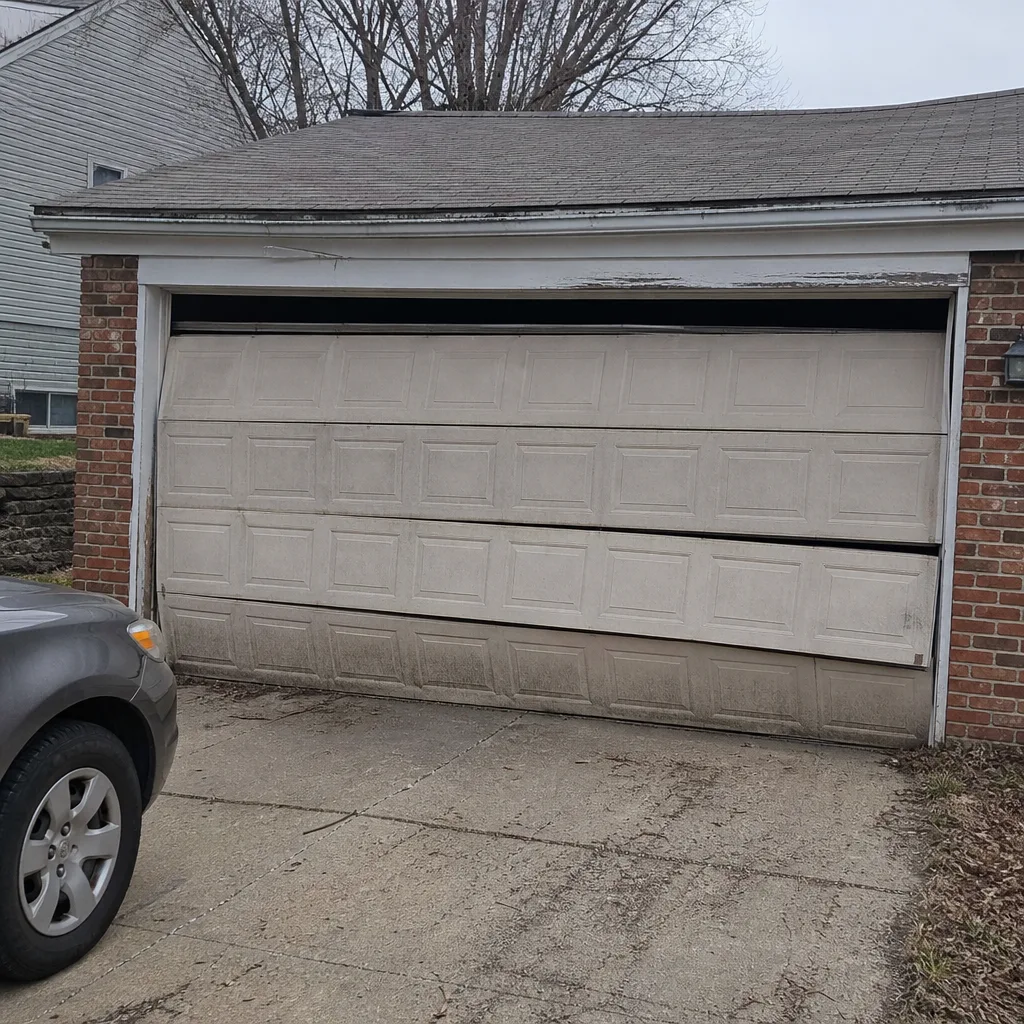 Before
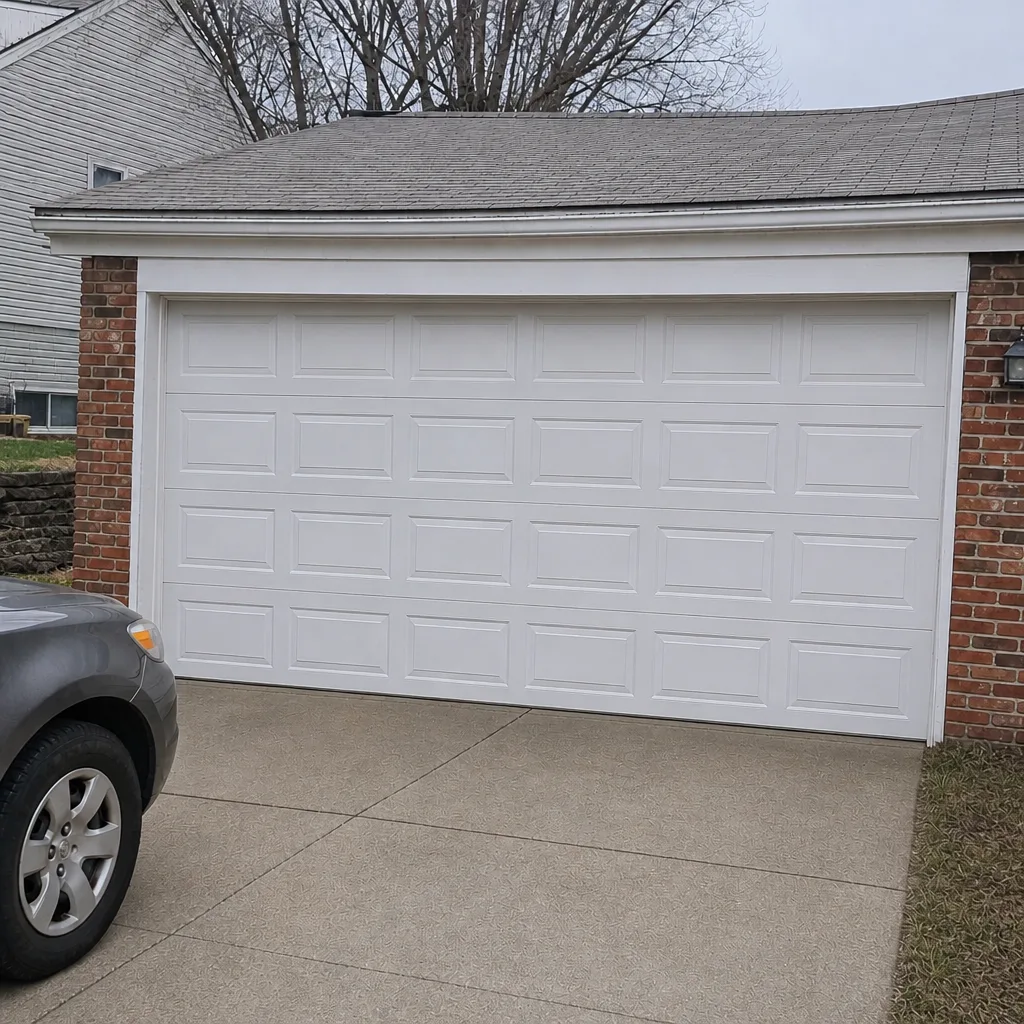 After
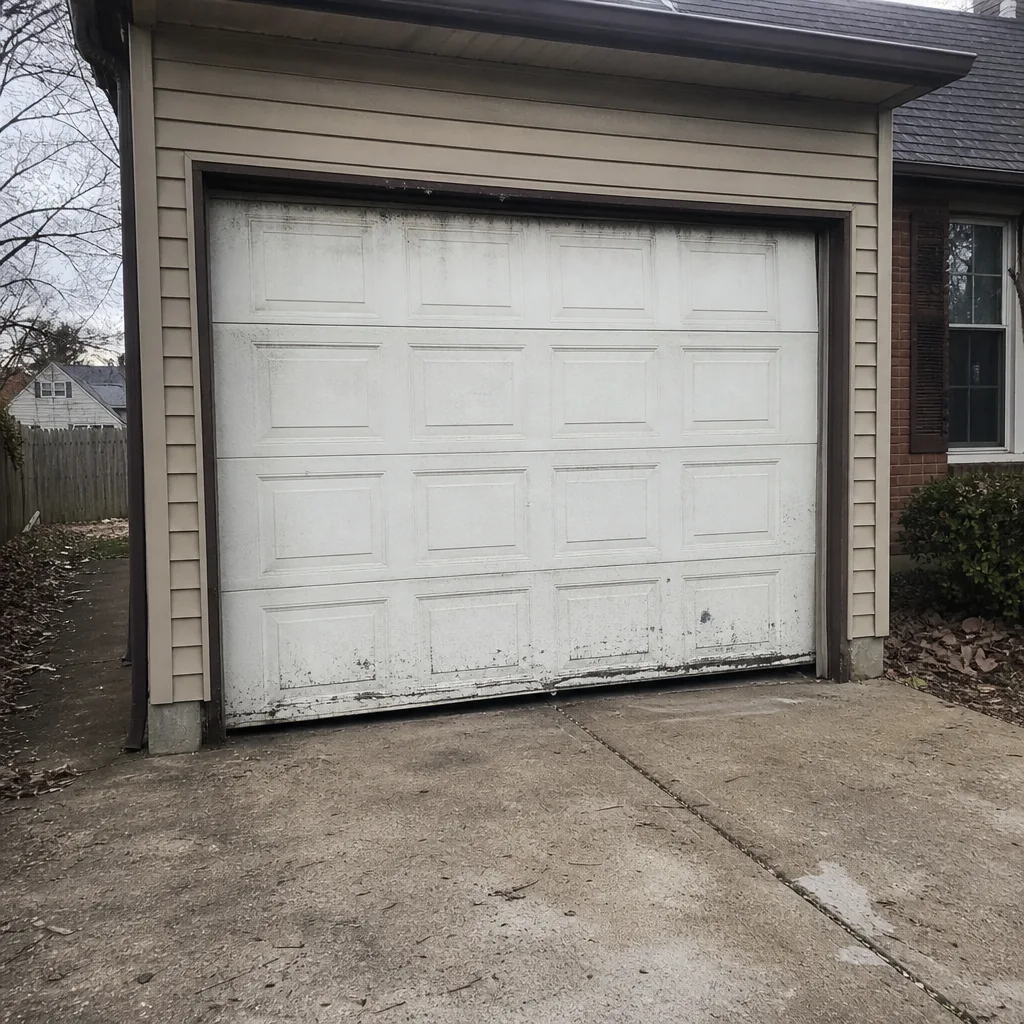 Before
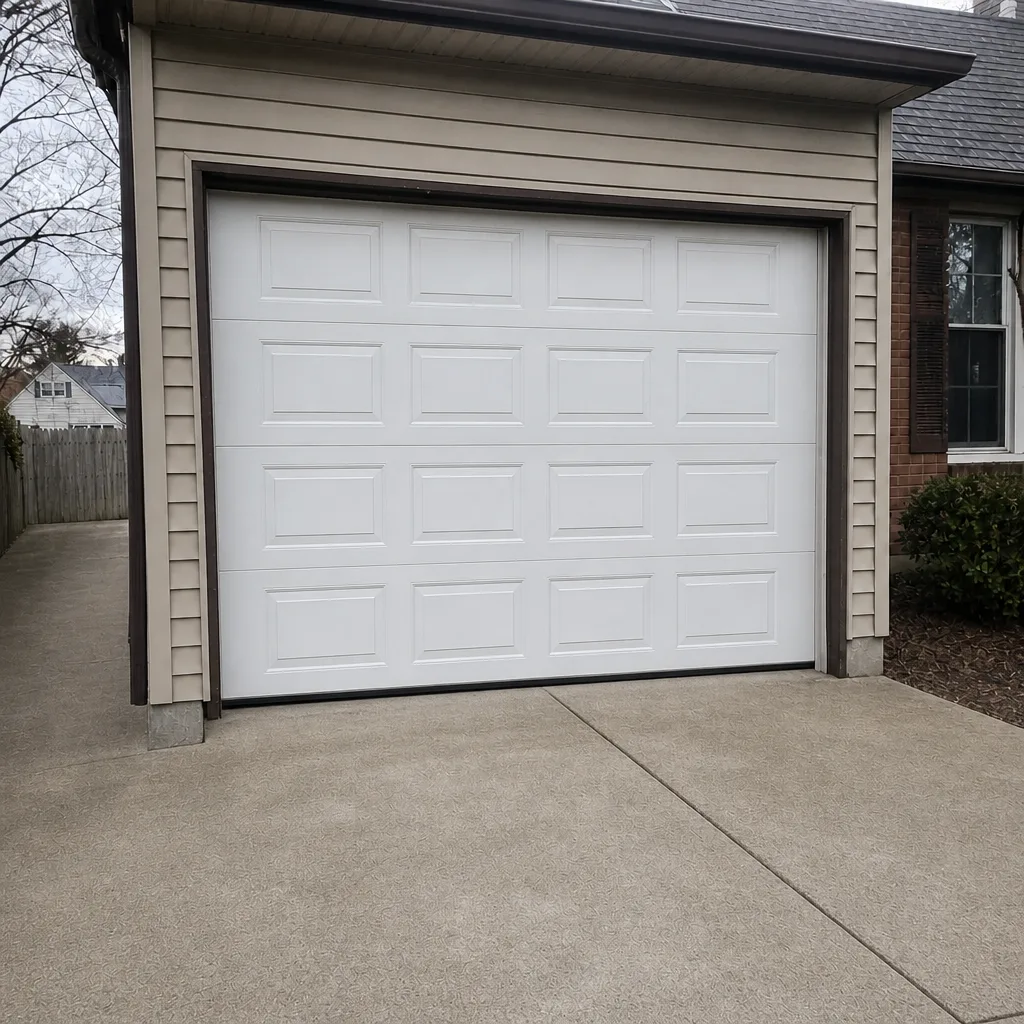 After
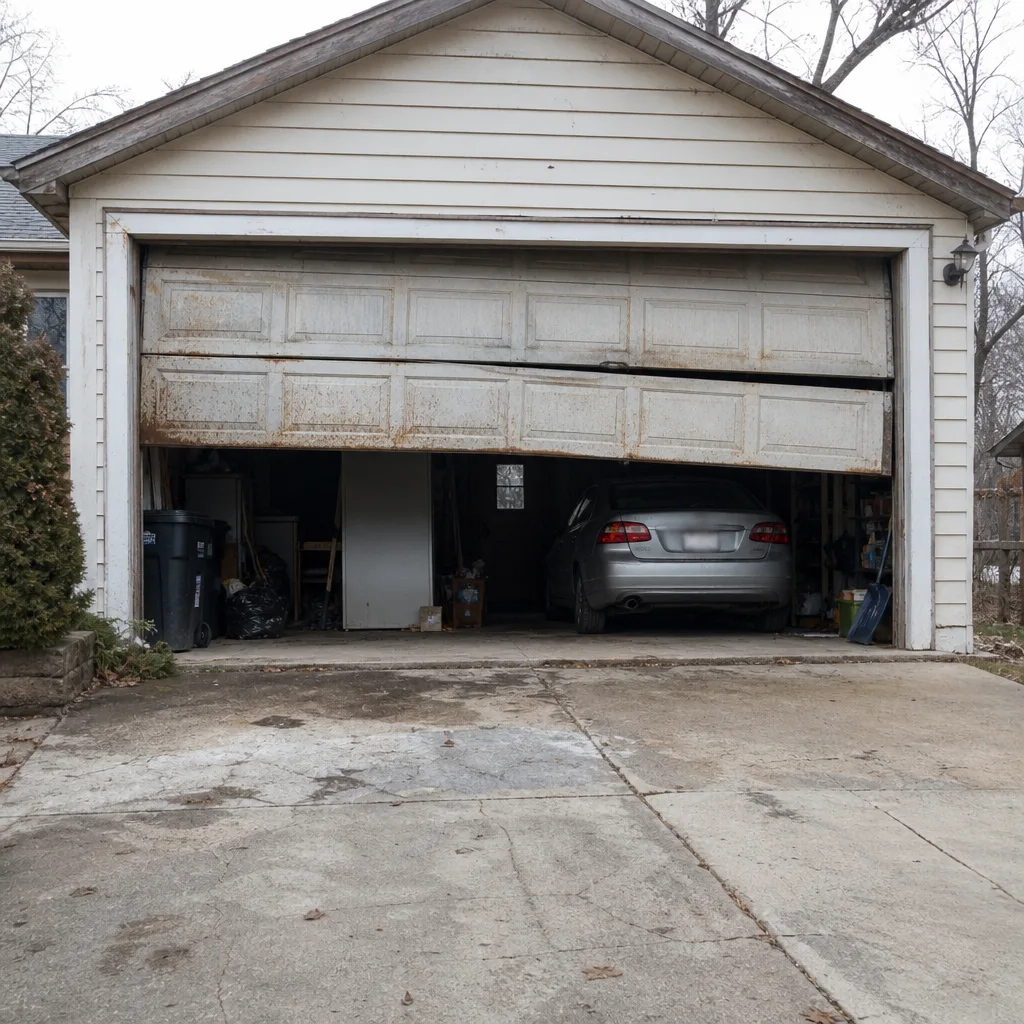 Before
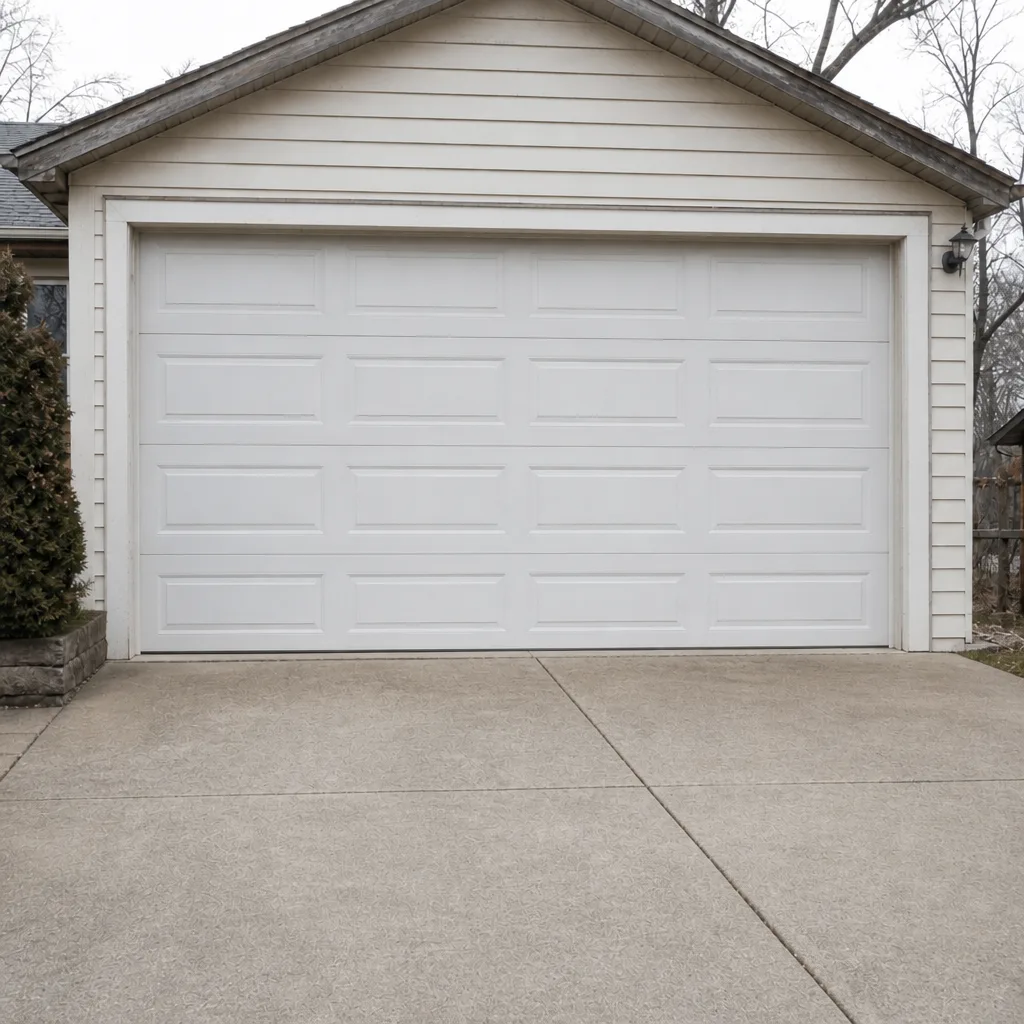 After
When to Call a Professional
Call a professional immediately for a snapped spring, a door that won’t move, a door that’s come off track, a cable that’s jumped, or anything that involves the door being stuck in a position other than fully closed or fully open. Call for a scheduled visit if the door is starting to show warning signs – uneven lift, a slight sag, a bottom seal that’s cracking, an opener that sounds strained. In St. Charles, our garage door specialists offer free estimates – call (877) 685-1815. Garage doors are all we do, which means we show up knowing your system before we touch your door, whether it’s a LiftMaster opener stalling in the cold or an Amarr door hanging off track after a wind event. Competent diagnosis is faster than the alternative, and it’s a free estimate that tells you exactly what’s wrong before any work starts.
If you’re interested in the full range of what we handle – including installation when a door is beyond repair – the main page walks through every service we offer.
Frequently Asked Questions
Most emergency calls in St. Charles land in a similar range: spring replacement typically runs $180 to $340 per spring, and a matched pair costs about twice that for a single spring. Opener repairs typically run $120 to $280 depending on the part. Emergency response adds to the visit but keeps the same underlying repair price. Call (877) 685-1815 for an exact quote – estimates are free.
Yes, we offer emergency garage door service and can typically respond to emergency calls in St. Charles the same day. When you call, describe what the door is doing and have the opener model number handy if you can. Call (877) 685-1815 to get on the schedule.
No. We quote the price before any work starts, and the written estimate is the price you pay. If the door reveals additional issues – a cable that’s also damaged, a bottom panel that needs replacing – we’ll show you what we found and quote that separately before we touch it. Call (877) 685-1815 for a free estimate.
Yes. The local pros we connect you with are licensed and insured as Missouri requires. Our technicians have up to 14 years of experience and are garage door specialists, not generalists. Call (877) 685-1815 to book a visit.
Look for three signs: a visible gap of an inch or more in the spring itself, a door that’s started lifting unevenly or sagging on one side, and a torsion tube that shows a fresh gap at the winding cone. If any of those are present, stop operating the door and call for inspection. Springs fail on the coldest mornings in St. Charles, so this is the right season to check.
Disengage the manual release with the door closed, then break the ice bond at the bottom seal with a rubber mallet or plastic scraper – never a metal tool. Lift the door by hand to confirm it moves freely, then re-engage and use the opener normally. If the door freezes again next year, that’s a worn seal and worth replacing.
Battery backup isn’t required, but ice storms and outages make it the most useful upgrade a St. Charles homeowner can make. LiftMaster and Chamberlain both offer battery backup models and kits, and Genie has similar options. If you’re replacing an opener, choosing one with battery backup included solves the problem in one visit.
The Bottom Line
Garage door emergencies in St. Charles are predictable. Springs fail on cold mornings, doors freeze to the slab after ice storms, openers die during outages, and cables jump when they’re showing visible wear. The preparation that turns each of these into a small inconvenience instead of a real emergency is simple: test the manual release twice a year, keep a parts kit on hand, write down your opener model number, and learn to read the warning signs. When a spring does snap, don’t touch the door – call a professional who knows the system. Our technicians have up to 14 years of experience and we handle everything from spring repair to complete new installation on LiftMaster, Chamberlain, Genie, Clopay, Amarr, Wayne Dalton, Craftsman, and Raynor systems. For a free estimate in St. Charles, call St. Charles Garage Door Repair Pros at (877) 685-1815.
Written by the team at St. Charles Garage Door Repair Pros.